
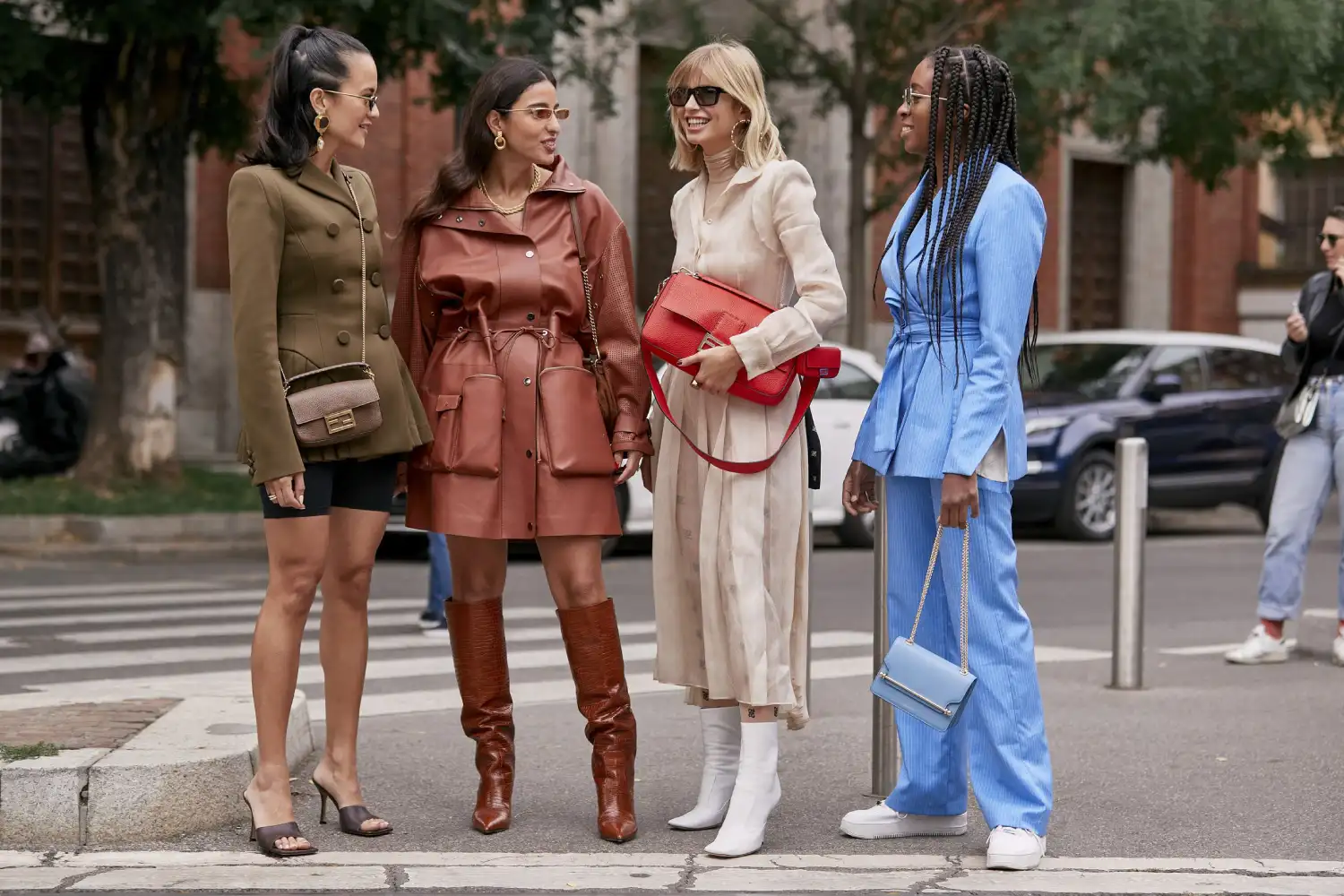
A chalky periwinkle blue, softer than cobalt and more interesting than powder blue, has cut through the earthy tones to provide a cool contrast that photographs well and lifts the complexion. It has appeared on tailored shirts, lightweight knits and, in a bolder iteration, relaxed suiting at several Australian resort collections. The colour has a particular appeal in the men’s market, where it offers a way to introduce colour into a wardrobe often dominated by navy, grey and white. Worn as a knitted polo with cream trousers and a suede loafer, it signals confidence without flamboyance. The shade also crosses the gender line seamlessly, appearing in women’s shirting, summer dresses and swimwear, proving itself to be one of the more versatile hues in the current palette.
Advertisement
Olive, in a rendition that is verging on a golden khaki, has been another workhorse colour that draws on Italian military and safari influences but is deployed by Australian labels in relaxed, unstructured garments. A golden-olive utility jacket, worn over a white T-shirt and paired with indigo denim, is a combination that has become ubiquitous in weekend settings. The colour is forgiving of creases, ages well through washing, and complements the warm undertones of tanned summer skin. In womenswear, the shade appears in wide-leg trousers, shirtdresses and linen blazers, often in garments constructed from fabric blends that incorporate hemp or organic cotton and lean into the natural, matte finish that gives the colour its depth. When the Milan runways offer a high-fashion version of a military-inspired jacket, the Australian high street adapts it into an unlined, soft-shouldered piece that is thrown over activewear on the school run as much as it is worn to a café meeting.
The translation of Milan’s colour trends into the Australian wardrobe is a process of cultural filtration rather than simple adoption. The Australian climate demands lighter fabrics, the lifestyle requires more washable garments, and the national aesthetic has an ingrained resistance to anything that looks like it is trying too hard. What emerges is a palette that shares DNA with the European collections but expresses it in a lower key. The aubergines, ochres, periwinkle blues and golden olives feel like natural additions to the local colour vocabulary, hues that will be worn for several seasons rather than discarded when the trend cycle turns. They have settled into the retail landscape with a quiet confidence, the kind that comes from colours that look right in the Australian sun.