
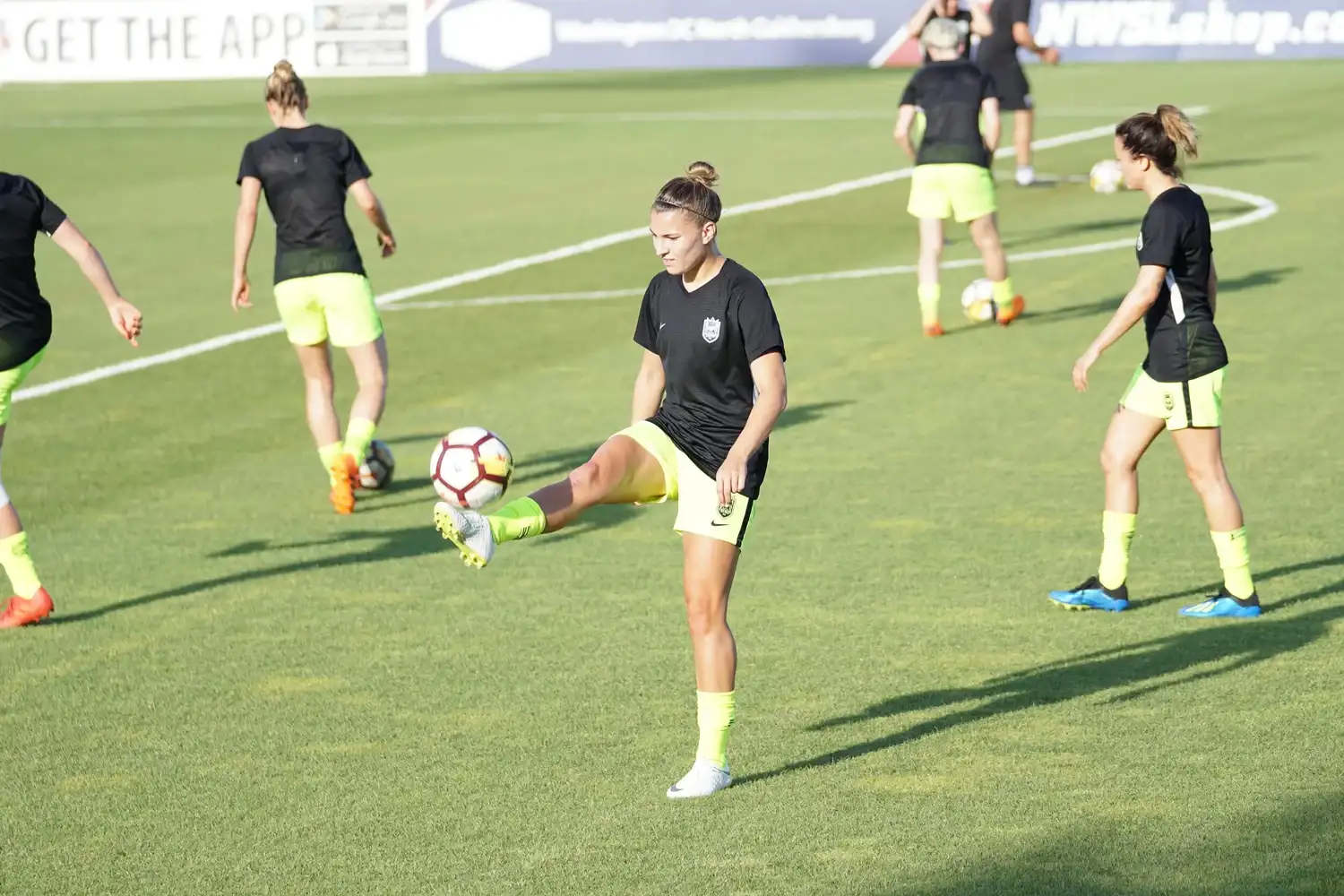
The number of women and girls playing organised football in Australia has continued its steep upward climb, with registration figures for the current season showing double-digit percentage growth across soccer, Australian rules football, rugby league and rugby union. The surge is not a sudden spike but the latest data point in a trend that has been building for more than a decade, driven by the visibility of elite female leagues, improved pathways and facilities, and a cultural shift that has made it unremarkable for a girl to pull on boots and run onto a pitch. The growth is broad-based, occurring across metropolitan, regional and remote areas, and it is beginning to strain the infrastructure of clubs that are scrambling to find enough grounds, changerooms, coaches and referees to accommodate the demand.
Advertisement
Soccer remains the largest and most geographically diverse code for female participation, with Football Australia’s legacy programmes and the success of the Matildas creating a pipeline that now sees girls lacing up in suburbs and towns where the round-ball game was once a male domain. The introduction of the A-League Women’s competition as a full home-and-away season has provided a visible local pathway, allowing young players to see a career arc that was previously accessible only to the few who could secure an overseas contract. Club presidents in the community leagues report that girls-only teams are forming at younger ages, that retention through the teenage years is improving, and that the demand for all-female MiniRoos programmes for the under-six and under-seven age groups exceeds the capacity to deliver them. The limiting factor is not interest but the availability of volunteers, fields and female coaches.
Australian rules football has experienced some of the sharpest growth rates, driven by the AFL Women’s competition and by deliberate investment from the league in community football development officers dedicated to female participation. The sight of a suburban Auskick centre with an even mix of boys and girls, unremarkable now but almost unheard-of a generation ago, is the most visible evidence of the shift. The challenge for the code is converting that early participation into ongoing involvement through the teenage years, a period when many girls drop out of sport. The league is trialling flexible competition formats, including nine-a-side and social-competitive options, that acknowledge not every participant wants to play in the full-contact, eighteen-a-side format on a full-sized ground. The early feedback is that offering a spectrum of formats, from social to elite, keeps more players in the game.